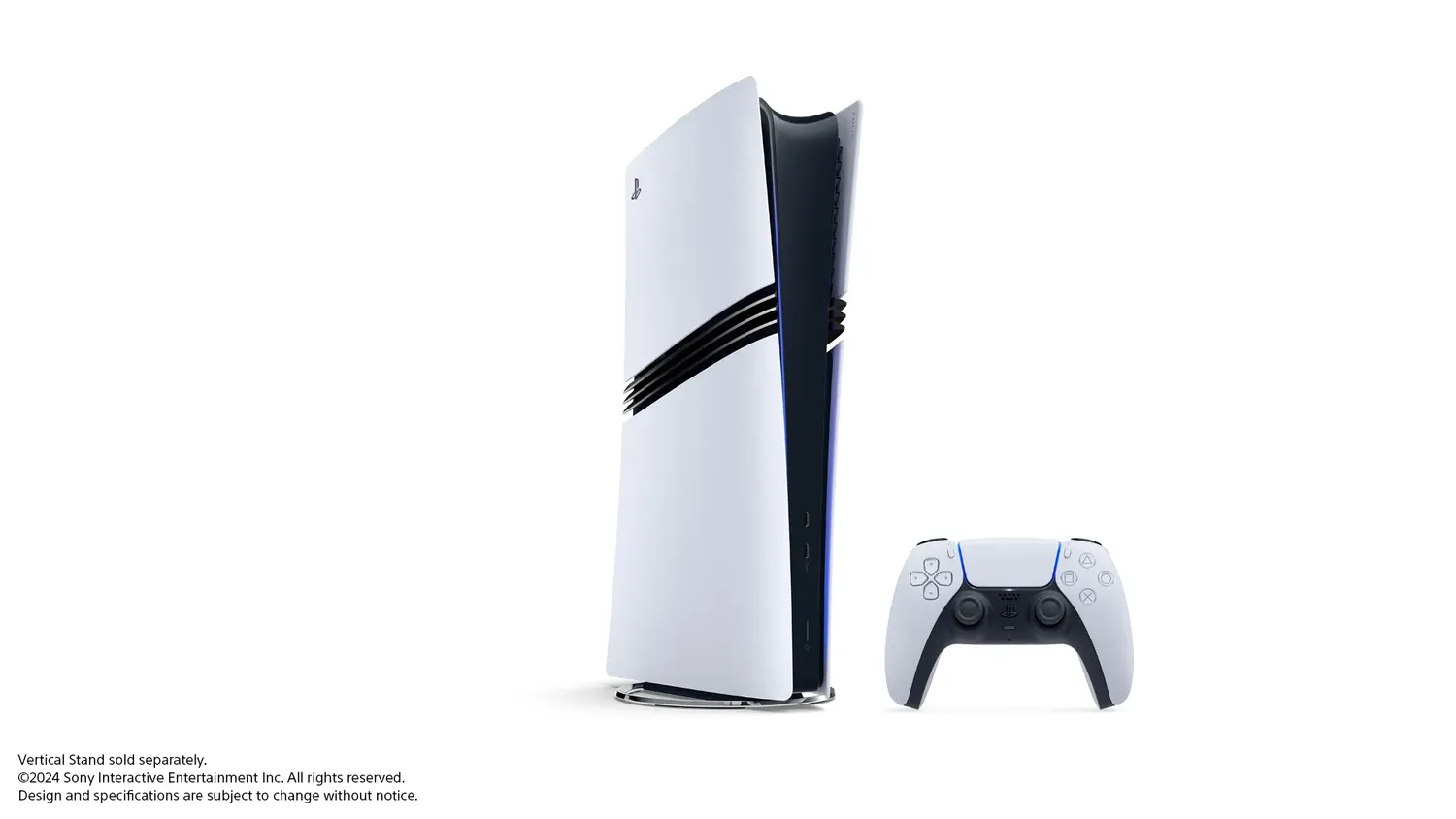
On September 10, 2024, Sony officially unveiled the PlayStation 5 Pro, a much-anticipated hardware refresh aimed at pushing console performance further.
After weeks of leaks and rumors, fans were ready for the reveal. But the presentation lasted only nine minutes, and its most noticeable new height seemed to be the console’s price.
Was this what fans were hoping for, or a minor upgrade wrapped in flashy marketing? Let’s look at what Sony got right and where the presentation missed the mark.
The official announcement covered:
- The redesigned console.
- Its headline technical improvements.
- Improvements shown in existing games.
- Preorders beginning September 26, 2024.
- A November 7, 2024 launch.
- A $699.99 starting price.
The console
I’ve never been a fan of the original PS5 design. This version is slightly better, but the overall shape still doesn’t appeal to me.
What stood out in every promotional image was the disclaimer: “Vertical Stand sold separately.” There is a reason that matters: in my opinion, the console doesn’t look good horizontally.
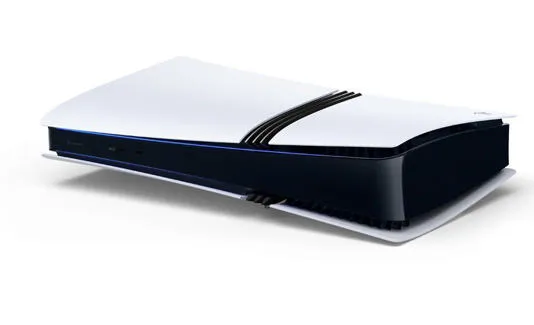
The horizontal PS5 Pro shown in launch coverage. Image via
MSN
.
I understand that aesthetics aren’t the main priority (we had the same debate four years earlier), but a console is still an object likely to remain visible in the living room, and it isn’t something I’d enjoy seeing every day.
Technical details
Before getting into my reaction, these were the main specifications Sony presented:
- Upgraded GPU: 67% more compute units than the original PS5 and 28% faster memory, enabling up to 45% faster rendering.
- Advanced ray tracing: calculations described as up to three times faster than the original console.
- AI-driven upscaling: PlayStation Spectral Super Resolution, or PSSR, using machine learning to improve image clarity.
- Storage: a 2TB SSD.
- Included software and hardware: a DualSense controller and Astro’s Playroom.
- Connectivity and display support: Wi-Fi 7, VRR, and 8K gaming support.
Compared with the original PS5 presentation, this reveal felt closer to that week’s iPhone event: vague on technical detail and heavy on buzzwords.
PSSR was the best opportunity to explain something genuinely new. More transparency about how it worked (and what developers and players should expect) would have made the pitch much stronger.
Game improvements
Ray tracing and AI were the fashionable topics of the generation, but the presentation never made a compelling case for why those technologies mattered here.
I appreciate the goal of maintaining performance while improving image quality, but how important is reaching 4K or 8K in practice? I value 60 frames per second, but I’m often comfortable with 30.
The comparison of The Last of Us Part II at 30 and 60 fps was noticeable. During the presentation, it was the clearest argument in favor of the Pro.
Many other examples were barely visible, especially without a reliable point of comparison. Someone who had never played those games on a PS5 wouldn’t know what changed. Saying something looks better without clearly showing how assigns homework to viewers already searching for a reason to spend $700.
YouTube compression is harsh, but if I can’t identify the improvement, how am I supposed to believe the refresh is worth the price?
Sony appeared to know what it wanted to say without knowing how to communicate it. Running a game’s Quality Mode without sacrificing performance is significant, so why spend time highlighting a slightly better tree in the distance?
Most importantly, the presentation showed no new games.
The graphics race feels less important than it once did. Players increasingly care about the experience more than the detail of a reflection. Nintendo’s success with comparatively modest hardware makes that difficult to ignore.
Showing new games could have persuaded people that upgrading, or entering the PlayStation ecosystem for the first time, was worthwhile for the holidays. Another presentation would probably arrive, but this reveal was already the perfect moment.
The price
$700 was not a casual purchase, especially for a base model without a disc drive or vertical stand. The likely buyers seemed to be people who already owned a PS4 or PS5 rather than new customers.
Entering the ecosystem with a Pro also meant buying games and potentially PlayStation Plus. Anyone who preferred physical media had to add the cost of the separate disc drive. The total quickly approached gaming-laptop territory.
Consoles were historically willing to sell hardware at a loss because software generated the real profit. The PS5 Pro price suggested Sony was unwilling to subsidize this refresh, emphasizing profitability over raw unit sales.
The price may have been defensible. It included a 2TB SSD, and the similarly equipped Xbox Series X model was priced at $600. But it still felt restrictive. My impression was that the target audience was the existing PlayStation user base, and I was never really the intended buyer.
My own situation made the decision worse. I didn’t own a TV or a PS4, preferred physical games, and lacked space to lay the console horizontally. I would also need games and probably PlayStation Plus for Monster Hunter. Entering the ecosystem was beginning to look like a purchase above $1,000.
A $600 console would have made the sacrifice easier to justify. After the presentation, my best option seemed to be buying a Steam Deck and saving for a PS5 Pro later, or simply waiting for the PS6.
Ironically, the PS5 Pro made the original PS5 look like a great deal. I have a habit of wanting the newest model because I imagine it will last longer, even when that means chasing a few extra frames and ignoring a much better price-to-performance ratio.
Once I had a TV, I planned to reconsider the original PS5. It looked like the more practical way to enter the ecosystem.
At the end of the day, Sony had already won: people like me were still considering buying in at all. That alone demonstrated the company’s hold on the console market.
Cover image © Sony Interactive Entertainment, from the official PS5 Pro announcement.